
The world’s most powerful radio telescope is getting intimate with Sagittarius A*, revealing a never-before-seen component of its accretion flow
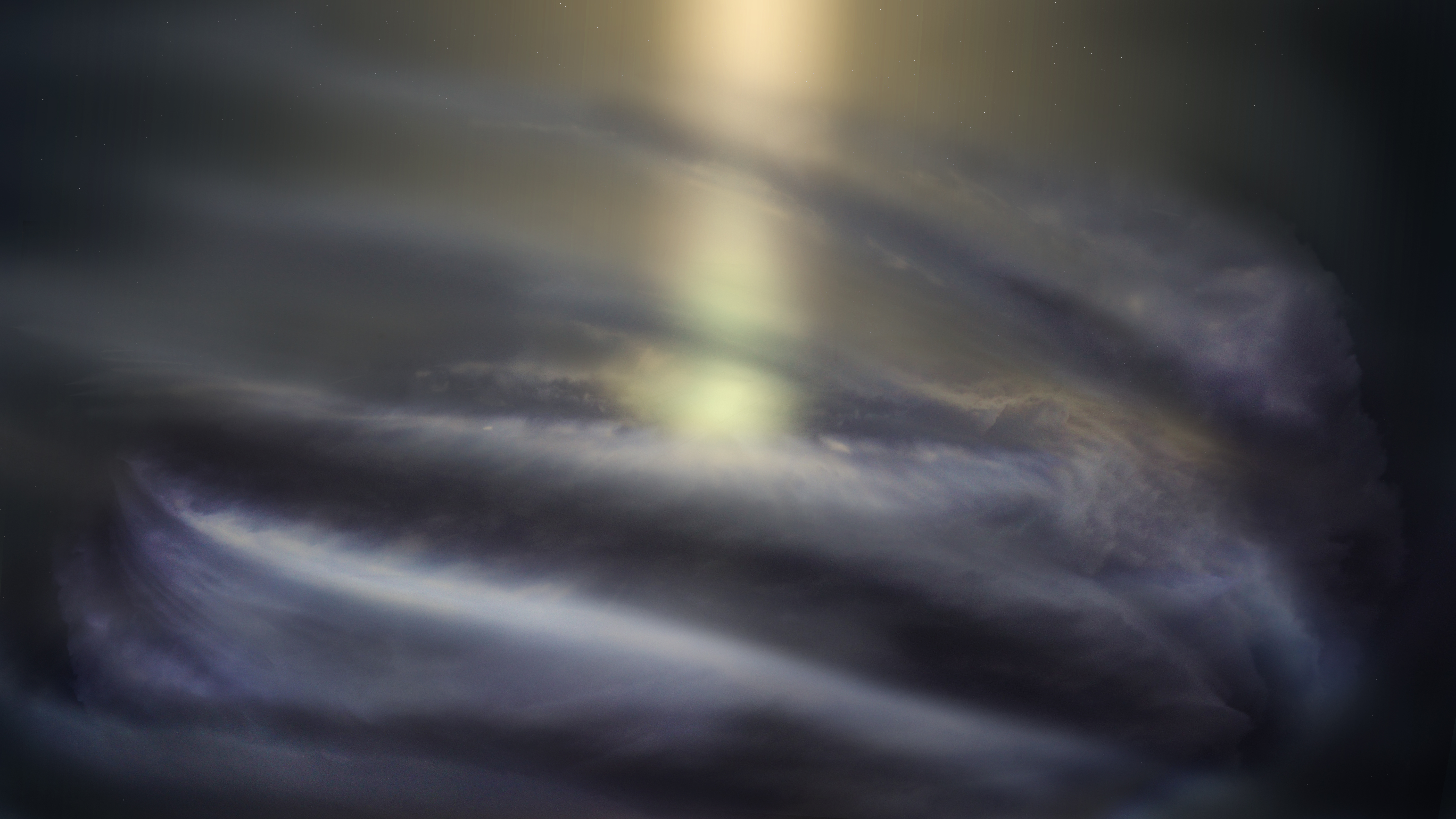
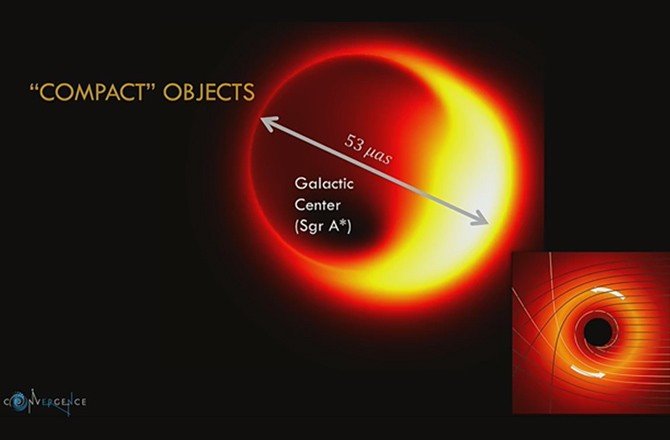
As we patiently wait for the first direct image of the event horizon surrounding the supermassive black hole living in the core of our galaxy some 25,000 light-years away, the Atacama Millimeter/submillimeter Array (ALMA) has been busy checking out a previously unseen component of Sagittarius A*’s accretion flow.
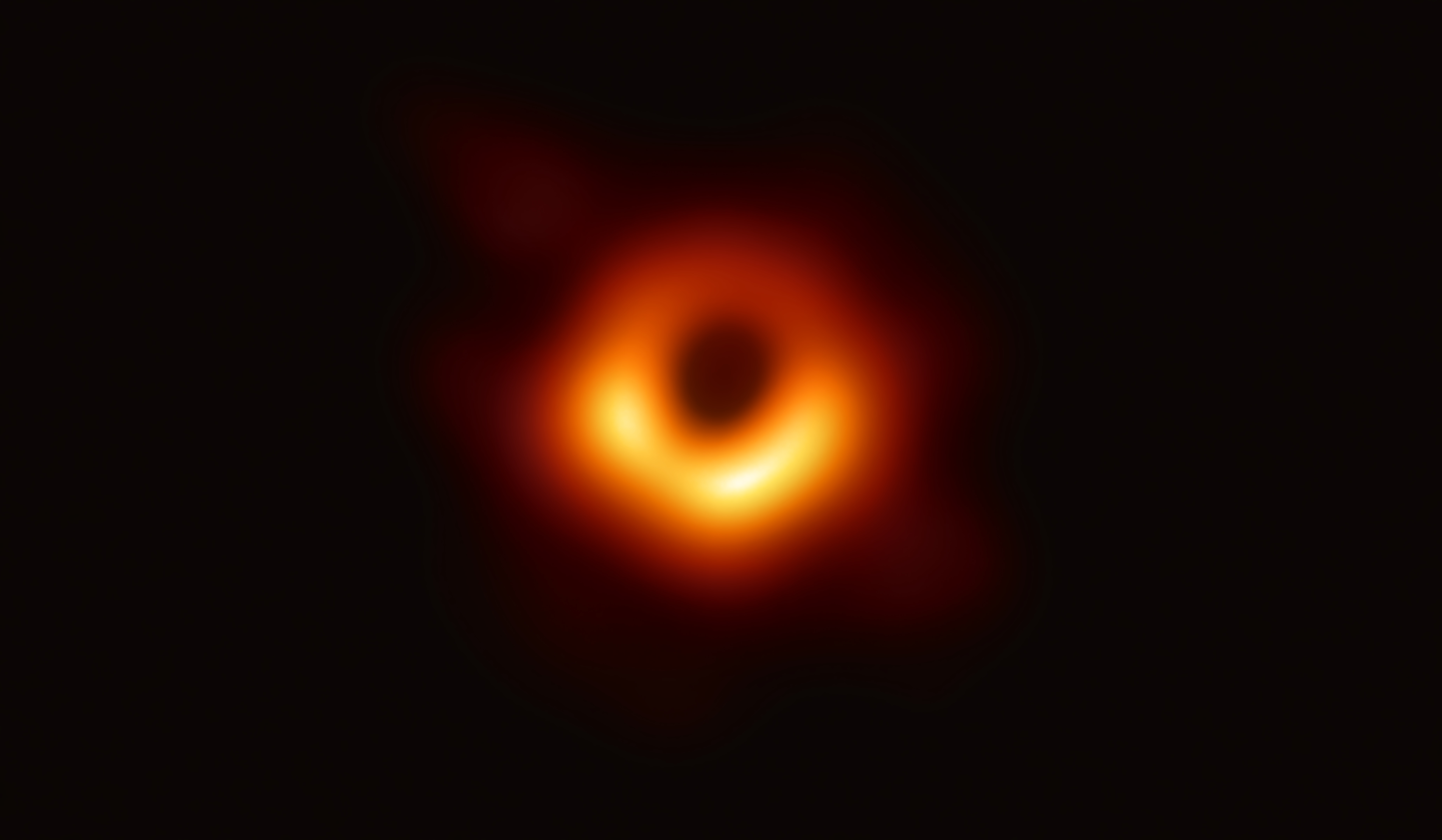
Whereas the Event Horizon Telescope (EHT) will soon deliver the first image of our supermassive black hole’s event horizon, ALMA’s attention has recently been on a cool flow of gas that is orbiting just outside the event horizon, before being consumed. (The EHT delivered its first historic image on April 10, not of the supermassive black hole in our galaxy, but of the gargantuan six-billion solar mass monster in the heart of the giant elliptical galaxy, Messier 87, 50 million light-years away.)
While this may not grab the headlines like the EHT’s first image (of which ALMA played a key role), it remains a huge mystery as to how supermassive black holes pile on so much mass and how they consume the matter surrounding them. So, by zooming in on the reservoir of material that accumulates near Sagittarius A* (or Sgr A*), astronomers can glean new insights as to how supermassive black holes get so, well, massive, and how their growth relates to galactic evolution.
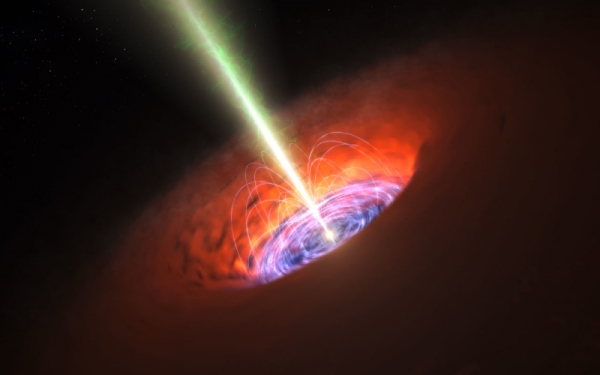
While Sgr A* isn’t the most active of black holes, it is feeding off limited rations of interstellar matter. It gets its sustenance from a disk of plasma, called an accretion disk, starting immediately outside its event horizon—the point at which nothing, not even light, can escape a black hole’s gravitational grasp—and ending a few tenths of a light-year beyond. The tenuous, yet extremely hot plasma (with searing temperatures of up to 10 million degrees Kelvin) close to the black hole has been well studied by astronomers as these gases generate powerful X-ray radiation that can be studied by space-based X-ray observatories, like NASA’s Chandra. However, the flow of this plasma is roughly spherical and doesn’t appear to be rotating around the black hole as an accretion disk should.
Cue a cloud of “cool” hydrogen gas: at a temperature of around 10,000K, this cloud surrounds the black hole at a distance of a few light-years. Until now, it’s been unknown how this hydrogen reservoir interacts with the black hole’s hypothetical accretion disk and accretion flow, if at all.
ALMA is sensitive to the radio wave emissions that are generated by this cooler hydrogen gas, and has now been able to see how Sgr. A* is slurping matter from this vast hydrogen reservoir and pulling the cooler gas into its accretion disk—a feature that has, until now, been elusive to our telescopes. ALMA has basically used these faint radio emissions to act as a tracer as the cool gas mingles with the accretion disk, revealing its rotation and the location of the disk itself.
“We were the first to image this elusive disk and study its rotation,” said Elena Murchikova, a member in astrophysics at the Institute for Advanced Study in Princeton, New Jersey, in a statement. “We are also probing accretion onto the black hole. This is important because this is our closest supermassive black hole. Even so, we still have no good understanding of how its accretion works. We hope these new ALMA observations will help the black hole give up some of its secrets.” Murchikova is the lead author of the study published in Nature on June 6.
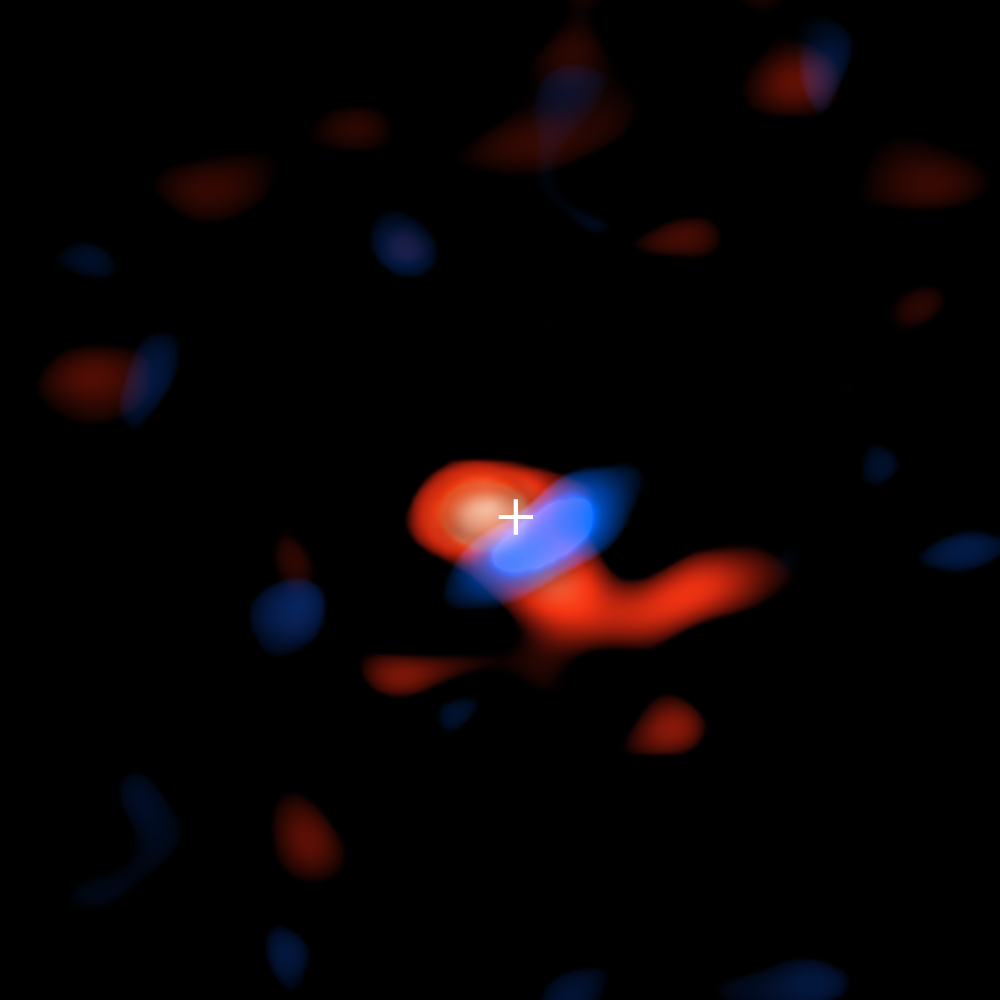
Located in the Chilean Atacama Desert, ALMA is comprised of 66 individual antennae that work as one interferometer to deliver observations of incredible precision. This is a bonus for these kinds of accretion studies, as ALMA has now probed right up to the edge of Sgr A*’s event horizon, only a hundredth of a light-year (or a few light-days) from the point of no return, providing incredible detail to the rotation of this cool disk of accreting matter. What’s more, the researchers estimate that ALMA is tracking only a minute quantity of cool gas, coming in at a total only a tenth of the mass of Jupiter.
A small quantity this may be (on galactic scales, at least), but it’s enough to allow the researchers to measure the Doppler shift of this dynamic flow, where some is blue-shifted (and therefore moving toward us) and some is red-shifted (as it moves away), allowing them to clock its orbital speed around the relentless maw of Sgr A*.
“We were able to shed new light on the accretion process around Sagittarius A*, which is a typical example of a class of black holes that have little to eat,” added Murchikova in a second statement. “The accretion behavior of these black holes is quite complex and, so far, not well understood.
“Our result is potentially important not only for our galaxy, but to any galaxy which has this type of underfed black hole in its heart. We hope that this cool disk will help us uncover more secrets of black holes and their behavior.”






 astroengine.com