

Imagine: You have been selected as one of the first six people to go to Mars and your sole mission is to set up a manned outpost on the Red Planet. Forget the science, forget the long-term goal to spread humanity amongst the planets, your one and only task is to survive. If you live long enough to put your boot print in the Martian regolith, or long enough to eat your first meal, sleep to see your second sol or celebrate your proto-colony’s first home cooked meal, it’s a bonus. You have to survive long enough to give mankind a foothold to begin living on Mars.

Assuming you and your five crew have set up camp. You’ve landed next to all the basic supplies you’ll need for the next few years, plus the equipment to build a sustainable settlement. The pressure of making it through the first day is off. You have a routine, and everyone appears to be doing well. How will you fill your time? No doubt simply living will fill all your waking hours, but humans being humans, you’ll want to make your experience unique, you’ll want to have some fun. Whether it’s taking some time to think about Earth and your family, or it’s taking a hike up the nearest mesa to claim the early Mars World Record of “climbing the highest, ever.”
If you could take 5 things to Mars with you (ignoring the essentials like water, food, toothbrush, socks, iPod), what would they be? Assuming cost and weight isn’t an obstacle (I’ll be a billionaire and I’ve chartered a SpaceX Falcon 9 Heavy just to transport “personal items”) here’s my top five luxury items I’d take to Mars with me…
In a recent Universe Today article, I discussed Buzz Aldrin’s views on colonizing Mars. Aldrin believes we should send a small number of people to the Red Planet to set up the first manned outpost with the intent to send more in the future. However, the first group of planetary pioneers shouldn’t expect to come home.
So, if you were going to Mars on a one-way trip, what luxury/useful items would you like to take with you? Here’s a list of five I think would be useful/interesting…
5. Photographs/videos of home

This one might not be very surprising, but it would be essential for your well-being. I’m sure there is a serious psychological reason for remembering “home” when in an unfamiliar situation (like… um, being on Mars), but critically I’d like to remember what my loved ones looked like and to remember what green looks like. Let’s face it, you wont see vibrant green leaves any time soon, and the only thing that will come close to green salad in your dinner bowl will be mould.
Also, be sure to bring your own camera to Mars. If you don’t live to tell the tale of your first few days on Mars, at least you’ll have a legacy in images of what it’s like to have lived on an alien world (you’ll spring to the top of the ranks of “famous – but deceased – Mars photographers”).
4. Barley seeds, bamboo, hemp… grapes?

You’ll certainly have a supply of terrestrial seeds for growing food and other useful plants (possibly for a natural form of life support etc.), but what about seeds of plants with not-so-obvious applications?
Take bamboo for example, it’s a flexible, tough and easy-to-grow building material. You can build everything from housing to furniture with fully grown bamboo plants. An added bonus with bamboo is its growth rate, if the conditions are right, bamboo can grow up to 1 ft (0.3 metres) per day. Depending on the growing conditions initially, and depending on whether you are able to create a nutritious soil from Mars regolith (Phoenix thinks Mars “soil” is more soil-like than we gave it credit for), you could have a bamboo forest inside your Mars greenhouse very soon (possibly solving the “green issue” described in #5). For more about the uses of bamboo in Mars construction, check out the Mars Homestead Project.
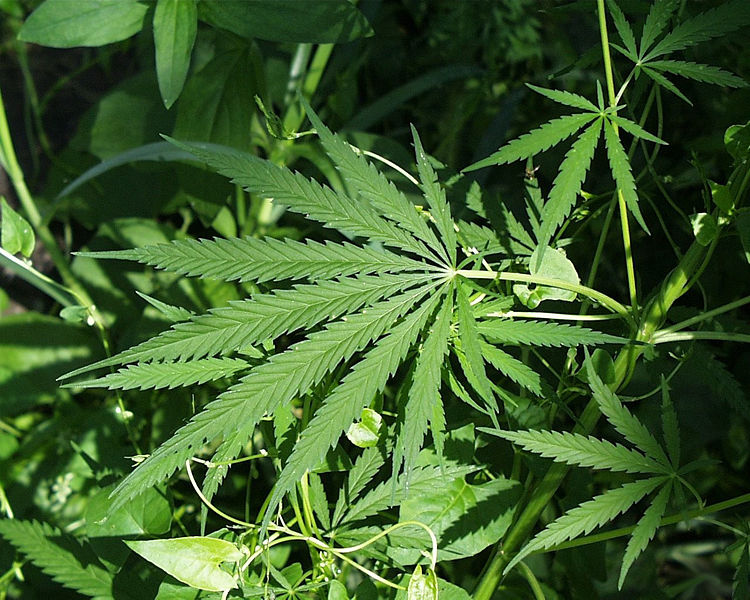
Hemp is also another fantastic plant that can be used in a whole range of industrial processes. From fabricating paper and clothing to being an ingredient for food, hemp is a fast-growing resource. Some varieties of hemp also have medicinal applications (and some obvious recreational applications…).
And what about barley and wheat? You can’t climb/drive all the way up Olympus Mons celebrating the feat without a cold beer can you? Also, if there was ever a better excuse to drink copious amounts of wine, this is it (so plant some vines in your greenhouse). Red wine contains an anti-oxidant called resveratrol linked with helping the human body fight off the damaging effects of free radicals and radiation. As you’d be exposed to a higher-than-normal level of solar radiation (as Mars doesn’t have a protective magnetic field or thick atmosphere), regular wine drinking sessions would be in order.
Get working on setting up Mars’ microbrewery/winery; if you’re going to be on this alien world for the rest of your days, you may as well live comfortably (and a little drunk)…
3. War of the Worlds audio
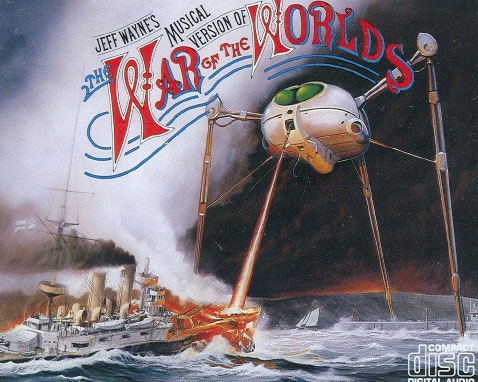
A must for all those who had the bejesus scared out of them when they were a kid. Whether you take the original 1938 broadcast (with Orson Welles narrating), a show that terrified thousands during a special Halloween broadcast in the US, or the 1976 Jeff Wayne musical version, it’s up to you. The 1938 version was a 60-minute show presented in a documentary style, leading many to think there was actually a Martian invasion under way in New Jersey. Both versions are based on H. G. Wells’ novel The War of the Worlds which depicted a Martian invasion in Woking, England in the 19th Century (please, don’t think about taking Steven Spielberg’s painful 2005 movie version, it’s just not the same).
The Jeff Wayne musical has famous tracks such as “Forever Autumn” and “Thunder Child” or the hard-hitting theme “The Eve of War” (“Da Da daaaaaa, Da Da daaaaaa“) that could be played throughout your habitat’s sound system, or blasted out over the Martian planes (but it would have to be loud, the Mars atmosphere is less efficient at propagating sound waves).
The Phoenix Mars Lander also has H. G. Wells’ original War of the Worlds text on the “Visions of Mars” CD board, so at least you’ll be able to make the trip to Vastistas Borealis to pull the CD off the deck of the lander. So don’t worry about bringing the book with you.
Why would you want to go through the hassle of doing all this? You mean apart from the awesomeness of being able to have War of the Worlds pumping at full volume, on Mars? Well, as you are invaders from Earth, I’m sure that if there is any Martian life on the planet, they’ll appreciate the irony.
2. Dune Buggy
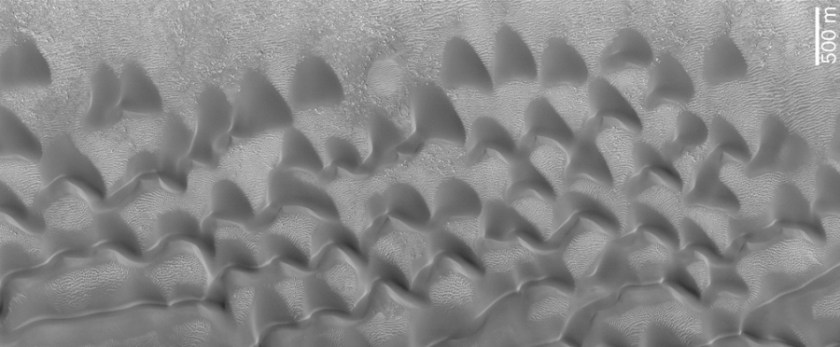
Mars has the same land area as the Earth. Plus there’s no vast volumes of water (such as oceans). This makes Mars a driver’s heaven. Mars rovers Spirit and Opportunity have been spinning their wheels on the planet for the last few years, generally without too many hitches. Admittedly they are slow movers, careful not to bump into any rover-sized boulders, but they get around with apparent ease.
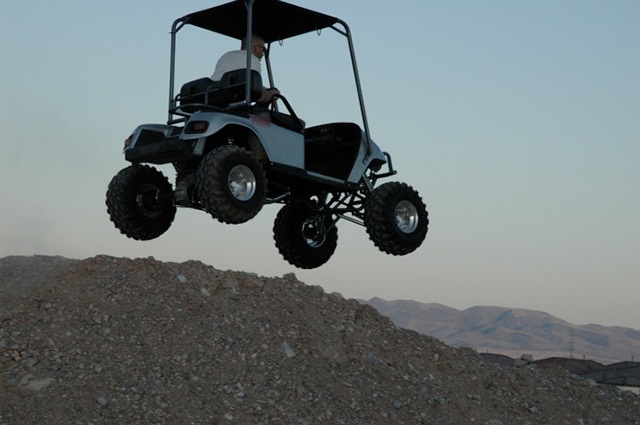
There is little doubt that the first manned expedition to Mars will include a wheeled vehicle of some description, but many of the Mars carts currently being designed are bulky, crawling limps of awkward-looking wheels and axles (think a bigger version of the Apollo lunar buggies).
How about modifying a dune buggy to carry one or two suited colonists purely for recreational use? Mars has ample regions of sand and barchan dunes – ideal for an adrenaline-filled romp in low-G at high speed. There also appears to be large areas of frozen, sandy plains – a great opportunity to eventually race neighbouring colonies when they start popping up around the planet. How about zooming along at the bottom of the deepest valley in the Solar System, Valles Marineris, or scooting up the side of the highest mountain, Olympus Mons?
Forget the rocket-racing league, this will be the Mars Dune Buggy Championships!
1. Golf clubs
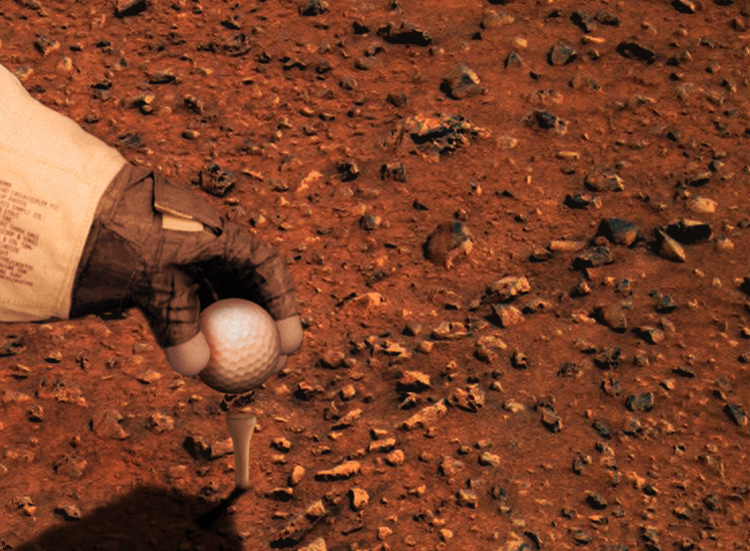
Want to swing like Tiger Woods? Well now you have the perfect chance. Whether you’re a golfer or not, it would be hard not to be excited about the possibility of thwacking a golf ball on the surface of Mars. However, you probably wouldn’t be able to walk between shots, this isn’t your average round (you might need #2 to transport you from tee-to-pin).
On the 1971 Apollo 14 mission to the Moon, Alan Shepard became the first person to play extraterrestrial golf, firing a ball a little under 200 meters over the lunar surface. He had to do a one-handed drive as the space suit was too restrictive for a normal grip on the club. Then in 2006, cosmonaut Mikhail Tyurin launched a ball on a million-mile orbital trip from the space station as a marketing stunt for a Canadian golf club manufacturer. So the next step would be a drive on the Martian surface, and with the help of the Mars gravity and thin atmosphere, even my horrible golfing skills will be well hidden.
Watch the NASA video of Alan Shepard tee shot off on the Moon:
Watch the NASA video of Mikhail Tyurin tee shot off the space station:
Usually golf club drivers are angled for shallow strikes (~10°), sending the golf ball across the fairway, countering air drag with lift. On Mars, as the atmosphere is so thin, the angle would need to be increased toward an optimum (for a vacuum) angle of 45°. On Earth, Tiger Woods can regularly achieve a tee-shot distance of over 300 meters. On Mars, with a surface gravity 38% (approximately 1/3) that of the Earth, and very tenuous atmosphere, a similar Woods drive (with a more lofted golf club, at 45°, say) would easily clear 1 km (1000 meters, or 0.62 miles). So generally, assuming you are able to execute a good golf swing inside your Mars space suit, you can expect your golf drives to be three times longer than on Earth. Awesome.
All packed? Let’s go!
In conclusion? If a manned expedition to Mars does become a reality, in all likelihood the space agency responsible will have plans for a return trip (despite the cost, a “survive or die” mission would probably be politically, and morally, unacceptable). But in case it is a one way trip, be sure to have everything with you (as you won’t be coming back to collect it)…


A satellite phone might be better than the photographs
I would think my own NCC-1701 (original, A, B, C, D, E) would be a good investment. A Minbari Flyer would be a good choice. I’m just not sure that a White Star can make an atmospheric landing. Anything from Farscape though would scare me. Daedalus would be good as well.
A Star Trek replicator would be excellent, but an SG-1 Replicator would not.
The Star Trek Companion would be interesting, but then who wants to live forever?
And whatever it takes to make Romulan Ale would also be a good companion with the barley, wheat and grapes. Potatoes too for vodka.
And probably a tasp to pass the time away.
Nice list, definitely gives us something to think about. Dugg!
I wonder if it was dugg because of the hemp? 😉
Either way, taking War of the Worlds is a must, as future Martians can laugh at the over reactive imaginations of their terrestrial brethren. 🙂
Red wine would definitely be fun, but the drawbacks linked to the alcohol content would outweight the benefit of the resveratrol (which is why most red wine recommendations are a glass a day), but that can easily be overcome with resveratrol supplements extracted from grape skin, grape seeds, but mostly japanese knotweed. Good call on the resveratrol either way. 🙂
Awesome post! Have you had a chance to watch 60 Minutes, Fox News, Oprah or Barbra Walters segments last weekend about it?
Basically, it shows promise in mice. For mice, has shown major health improvements including blood sugar control. Keep in mind that 6 out of 10 major drug successes in mice – fail in humans. But the limited human trials showed promise and there are some patients that claim it helps. However, this could be the ‘placebo effect,’ and only empirical data under controlled experiments can tell for sure. It will take a few years for these clinical trials to conclude.
You can get supplements of the extract right now. While it is safe, it is not guaranteed to work. Before making a decision, you should watch all the videos. Here’s the a recap from all the trustworthy shows:
http://resveratrolcertifiedsupplements.com/?page_id=4
I did some research and learned the following: You can only get 1-2mgs of it in a single bottle of wine. So, white, it’s a good excuse to drink wine, but you really won’t get much benefit. There are resveratrol supplements on the market – but many do not have the required strength and they don’t work for everyone. The only way to know for sure is to try the supplements. Hope you find this interesting… its a future hope for the fountain of youth and treatments (not cures) for countless diseases.
-Linda, the Good Nurse.
Let’s face it, you wont see vibrant green leaves any time soon, and the only thing that will come close to green salad spinner in your dinner bowl will be mould.
this made me laugh! 🙂 great post thanks
We feel thaT this webpage SUCKS!!!!!!!
We feel thaT this webpage SUCKS!!!!!!!
Nice post, I already dream about a trip to Mars but I never thought it was so close to reality. I m just a bit scared of the human impact that we can have on this unspoiled planet. When I see what we did to the Earth in 200 years I’m not so optimistic to see the humans invading a new planet. Let s try to find a solution for our planet before moving to another one! Personally, I try to reduce the time I spend using my car, I try to save water, and I try to avoid the throwing things away reflex we have. For my unused items I chose Self Storage, it’s a good way to save my things and it s doing something for environment.
Virtual technology must be looked into as well. We can fly planes, rockets and re experience world war 2 all by computer games. I communicate by skype with my relatives and don't see an urgent need to return home. The idea is not that ridiculous.
Dont forget to take your fleshlight and a blow up doll. it will come in handy